🎱 8 Ball Pool Rules: The Ultimate Guide for Indian Players 🇮🇳
8 Ball Pool is more than just a game — it's a way of life for millions of cue sports enthusiasts across India. From bustling pool halls in Mumbai and Delhi to friendly matches on mobile phones in every chai stall, the 8 Ball Pool rules shape every shot, every strategy, and every victory. Whether you're a beginner trying to understand the break or a seasoned player aiming for national-level precision, this guide covers everything you need to know about 8 Ball Pool rules in India.
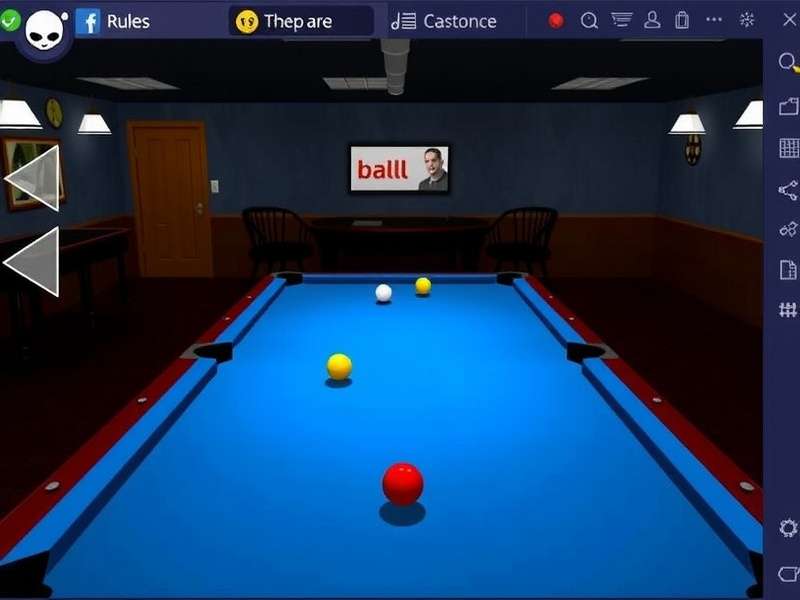
In India, 8 Ball Pool has evolved from a colonial-era pastime into a digital and physical phenomenon. With millions of players competing in local leagues, online platforms, and friendly neighbourhood matches, understanding the 8 Ball Pool rules is essential for anyone who wants to play with confidence. This guide dives deep into every rule, every foul, and every strategy that defines the game.
1. 🏆 Introduction to 8 Ball Pool in India
8 Ball Pool is a cue sport played on a rectangular table with six pockets. Each player or team uses a cue ball to pocket a set of seven object balls (solids or stripes) and finally the 8-ball. The 8 Ball Pool rules are standardized by the World Pool-Billiard Association (WPA), but in India, we have our own local flavour — from "cut break" techniques to "double-deuce" calls in street matches.
India has a rich billiard heritage. From the British-era clubs in Kolkata to modern gaming zones in Bengaluru, the game has found a permanent home. The rise of mobile gaming has further boosted the popularity of 8 Ball Pool, with platforms like Miniclip and local apps hosting millions of Indian players daily. This guide is designed specifically for the Indian audience — we use the terms you know, the strategies you need, and the rules that matter in your local matches.
🇮🇳 Did You Know? India has over 50 registered state-level 8 Ball Pool associations and more than 2,000 professional cueists. The 8 Ball Pool rules followed in Indian tournaments are based on the BSFI (Billiards Sports Federation of India) guidelines, which align with international standards but include special provisions for local league play.
1.1 What is 8 Ball Pool?
8 Ball Pool is the most widely played pool game in the world. It uses 15 object balls numbered 1 through 15, plus a cue ball. The balls are divided into two groups: solids (1–7) and stripes (9–15). The 8-ball (number 8) is black and is the final ball that must be pocketed after clearing your group. The 8 Ball Pool rules determine everything from the break to the win condition.
1.2 The History and Popularity of 8 Ball Pool in India
Billiards arrived in India during the British Raj, but the American variant 8 Ball Pool gained widespread traction in the 1980s and 1990s. Today, India has a thriving cue sports ecosystem. According to the Billiards Sports Federation of India, there are more than 1.2 million registered players across states like Tamil Nadu, Maharashtra, Karnataka, and West Bengal. The 8 Ball Pool rules taught in Indian academies combine international standards with local adaptations — for example, the "three-foul rule" is often modified in friendly games.
1.2.1 Why 8 Ball Pool is a Household Name in Indian Gaming
From kabaddi to cricket, India loves competitive sports. 8 Ball Pool fits perfectly into this culture — it's strategic, skill-based, and highly social. In cities like Pune, Hyderabad, and Chennai, dedicated 8 Ball Pool parlours host weekly tournaments. Online, the game has exploded with over 100 million downloads on the Google Play Store from Indian users alone. The 8 Ball Pool rules are the backbone of this massive community.
2. 📜 Essential 8 Ball Pool Rules Every Player Must Know
Whether you're playing in a professional league in Delhi or a friendly match at a Bengaluru gaming cafe, the 8 Ball Pool rules remain largely consistent. Below, we break down every rule with clarity and depth.
2.1 Basic Setup and Equipment
A standard 8 Ball Pool table measures 7 feet, 8 feet, or 9 feet in length. The table is covered with a green or blue cloth, with six pockets — one at each corner and one at each side. The 8 Ball Pool rules specify that the balls should be racked in a triangle formation, with the 8-ball in the centre, one solid in one corner, and one stripe in the opposite corner. The cue ball is placed behind the head string for the break shot.
2.2 The Break Shot
The break is the opening shot of the game. According to the 8 Ball Pool rules, the breaker must strike the cue ball from behind the head string and hit the racked balls with enough force to send at least four balls to a cushion or pocket a ball. A legal break requires the cue ball to contact the rack directly — no "sidespin" or "cut break" tricks are allowed in official play. In Indian street matches, the breaker often gets to choose who breaks in the next game if they pocket a ball on the break.
💡 Pro Tip from Indian Cueists: In many 8 Ball Pool tournaments across India, the "break box" method is used — the cue ball must be placed within a specifically marked area behind the head string. Always confirm the local variant of the 8 Ball Pool rules before starting a match.
2.3 Open Table Rules
After the break, the table is "open" — meaning no player has been assigned solids or stripes yet. The 8 Ball Pool rules state that a player must call which ball they intend to pocket and into which pocket. If they legally pocket a called ball, they are assigned that group (solids if they pocketed a solid, stripes if they pocketed a stripe). If they pocket balls from both groups on the same shot, they still get to choose their group.
2.4 Calling Shots and Pockets
One of the most important 8 Ball Pool rules is the "call shot" rule. Before every shot (except the break), the player must declare which ball they intend to pocket and which pocket they will use. If they pocket a different ball or use a different pocket, it's a foul, and the incoming player gets ball-in-hand. In Indian casual games, this rule is sometimes relaxed, but in official tournaments, it's strictly enforced.
2.5 Fouls and Penalties
Fouls in 8 Ball Pool can cost you the game. Common fouls include:
- Scratch: Cue ball goes into a pocket.
- No contact: Cue ball fails to hit any object ball.
- Illegal pocket: Pocketing the opponent's ball without calling it.
- Double hit: Striking the cue ball twice during a shot.
- Jump shot: Lifting the cue ball off the table intentionally.
Under standard 8 Ball Pool rules, a foul gives the opponent ball-in-hand — they can place the cue ball anywhere on the table. After three consecutive fouls by one player, the game is forfeited.
2.5.1 Common Fouls to Avoid
Indian players often struggle with the "cue ball scratch" on break shots. A common local adaptation in 8 Ball Pool rules is that if you scratch on the break, the opponent gets cue ball behind the head string. Another frequent foul is "touching the ball" — in Indian matches, players sometimes adjust balls by hand, which is a strict foul in official play.
2.5.2 The Three Foul Rule
The three consecutive fouls rule is a critical part of 8 Ball Pool rules that many casual players overlook. If a player commits three fouls in a row without making a legal shot, they lose the game. This rule is designed to prevent defensive stalemates. In Indian tournaments, this rule is enforced rigorously, especially in the knockout stages.
3. 🧠 Advanced Strategies and Techniques
Knowing the 8 Ball Pool rules is just the beginning. To dominate the table, you need strategy. Indian players have developed unique approaches that blend defensive precision with aggressive shot-making.
3.1 Positional Play
Positional play is the art of controlling the cue ball's position for the next shot. Under the 8 Ball Pool rules, you can use spin (English), draw, follow, and stop shots to position the cue ball. Indian professionals like Pankaj Advani and Aditya Mehta emphasize that "position play separates the amateur from the expert." In local 8 Ball Pool halls, you'll hear players say "play the white, not the colour" — meaning focus on cue ball control.
3.2 Defensive Shots
A defensive shot (or "safety") is a legal shot that doesn't pocket a ball but leaves the opponent in a difficult position. The 8 Ball Pool rules allow safety shots as long as a ball is hit and a cushion is contacted. In Indian matches, defensive play is highly respected — "giving a snooker" is considered a mark of strategic brilliance.
3.3 Bank Shots and Kick Shots
Bank shots (rebounding off a cushion) and kick shots (hitting the object ball off a cushion) are essential tools. The 8 Ball Pool rules allow these shots as long as the cue ball doesn't foul. Indian players often practice "double bank" shots, especially on the wider tables found in clubs across Mumbai and Kolkata.
3.4 Breaking Strategies
The break shot can determine the entire game. In 8 Ball Pool, a powerful, accurate break can spread the balls favourably. Indian players favour the "cut break" (hitting the rack from a slight angle) to increase the chance of pocketing a ball. However, the 8 Ball Pool rules require that the break must be legal — the cue ball must cross the head string after contact.
4. 🌏 8 Ball Pool Variations and Game Modes
The beauty of 8 Ball Pool lies in its variations. Different regions in India play with modified 8 Ball Pool rules, and online platforms have introduced new modes that change the dynamics.
4.1 8 Ball Pool Classic Rules
8 Ball Pool Classic follows the traditional WPA rules. This is the most common format played in Indian tournaments and on platforms like 8 Ball Pool Classic. The classic format emphasizes skill, patience, and precision. Many Indian players prefer this format because it tests every aspect of cue control.
4.2 8 Ball Billiard vs 8 Ball Pool
While 8 Ball Billiard is sometimes used interchangeably with 8 Ball Pool, there are subtle differences. In traditional billiards, the table has no pockets, while 8 Ball Pool is a pocket game. However, in India, the terms are often blended. The 8 Ball Pool rules for billiard-style play typically include carom shots and point-based scoring instead of pocketing.
4.3 Online 8 Ball Pool Rules
Online platforms like Pool Online Game have adapted the 8 Ball Pool rules for digital play. These versions often include power-ups, time limits, and automated foul detection. The core rules remain the same, but the pace is faster. For Indian players with mobile devices, online 8 Ball Pool has become the primary way to practise and compete.
4.4 8 Ball Pool Cool Math Games
The 8 Ball Pool Cool Math Games variant uses simplified 8 Ball Pool rules that focus on geometry and angles. This educational version is popular among Indian school students who use it to learn physics concepts like reflection, momentum, and trajectory planning. The rules are relaxed — no fouls for scratches, and the table is smaller.
4.5 8 Ball Pool USA
The 8 Ball Pool USA format follows the American Pool Association (APA) rules, which differ slightly from international standards. In India, this format is sometimes used in expat clubs and international tournaments. Key differences include the "no-slop" rule and specific break requirements.
4.6 8 Ball Pool Unblocked At School
Many Indian students enjoy 8 Ball Pool Unblocked At School — a browser-based version that bypasses school network restrictions. The 8 Ball Pool rules in this version are standard, but the interface is minimalist to reduce bandwidth usage. It's a fun way to learn the game during breaks.
5. 🏅 Tournaments and Competitive Play
India has a vibrant 8 Ball Pool tournament scene. From local club championships to national-level competitions, the 8 Ball Pool rules are the foundation of fair play.
5.1 Indian 8 Ball Pool Tournaments
The Billiards Sports Federation of India (BSFI) organizes annual national championships for 8 Ball Pool. State-level qualifiers are held in Tamil Nadu, Karnataka, Maharashtra, and West Bengal. The 8 Ball Pool rules in these tournaments are strictly based on WPA standards, with Indian adaptations for time limits and attire. Prize pools have grown significantly — the 2024 National Championship offered ₹25 lakhs in total prizes.
5.2 Professional League Rules
Professional leagues in India follow the Basic 8 Ball Pool Rules but with additional regulations: players must wear formal attire, matches are best-of-11 racks, and a referee is present for every match. The 8 Ball Pool rules for professional play also include instant replay reviews for disputed shots — a feature borrowed from international billiard tours.
6. ❌ Common Mistakes and How to Fix Them
Even experienced Indian players make errors that violate the 8 Ball Pool rules. Here are the most common mistakes and how to avoid them:
- Not calling the pocket: Always announce your target — even in practice matches.
- Forgetting the cue ball scratch: After a scratch, the opponent gets ball-in-hand. Use this to your advantage.
- Playing too fast: Speed kills accuracy. Take your time to plan each shot.
- Ignoring the 8-ball placement: When pocketing the 8-ball, ensure you call the pocket clearly — otherwise, you lose the game.
7. 🙋 Frequently Asked Questions (FAQ)
7.1 What are the basic 8 Ball Pool rules?
The Basic 8 Ball Pool Rules include: break the rack, assign groups (solids/stripes), call your shots, pocket your group, and finally pocket the 8-ball in your called pocket. Fouls give the opponent ball-in-hand.
7.2 Can you play 8 Ball Pool alone?
Yes, many Indian players practise alone using Pool Game apps that include solo modes. The 8 Ball Pool rules for solo play are the same, but you play against a timer or try to beat your own high score.
7.3 Where can I play 8 Ball Pool near me in India?
Use our guide to Places To Play 8 Ball Pool Near Me to find local billiard halls, clubs, and gaming zones. Most Indian metropolitan cities have dedicated 8 Ball Pool venues with professional tables.
7.4 What is the difference between 8 Ball Pool and 9 Ball Pool?
In 8 Ball Pool, you play with 15 balls and must pocket either solids or stripes before the 8-ball. In 9 Ball Pool, only balls 1 through 9 are used, and you must hit the lowest-numbered ball first. The 8 Ball Pool rules are more complex and strategic.
7.5 Is 8 Ball Pool popular in India?
Absolutely. India has one of the largest 8 Ball Pool player bases in the world, with millions of casual and professional players. The game is especially popular in Tamil Nadu, Maharashtra, Karnataka, and West Bengal.
8. 🎯 Conclusion: Master the 8 Ball Pool Rules
Understanding the 8 Ball Pool rules is the first step toward becoming a skilled player. Whether you're playing in a Lucknow club, a Chennai tournament, or on your phone during a Mumbai local train commute, the rules provide the framework for fair and exciting competition. India's 8 Ball Pool community is growing every day, and with the right knowledge, you can be part of this incredible journey.
Remember: the 8 Ball Pool rules are not just restrictions — they are the foundation of strategy, creativity, and sportsmanship. Practice regularly, learn from every match, and most importantly, enjoy the game. As we say in India's billiard halls: "White in hand, game in hand." 🎱🇮🇳
Search 8 Ball Pool Rules & Guides
Find exactly what you're looking for — rules, strategies, tournament info.
Share Your Experience